Selected writing
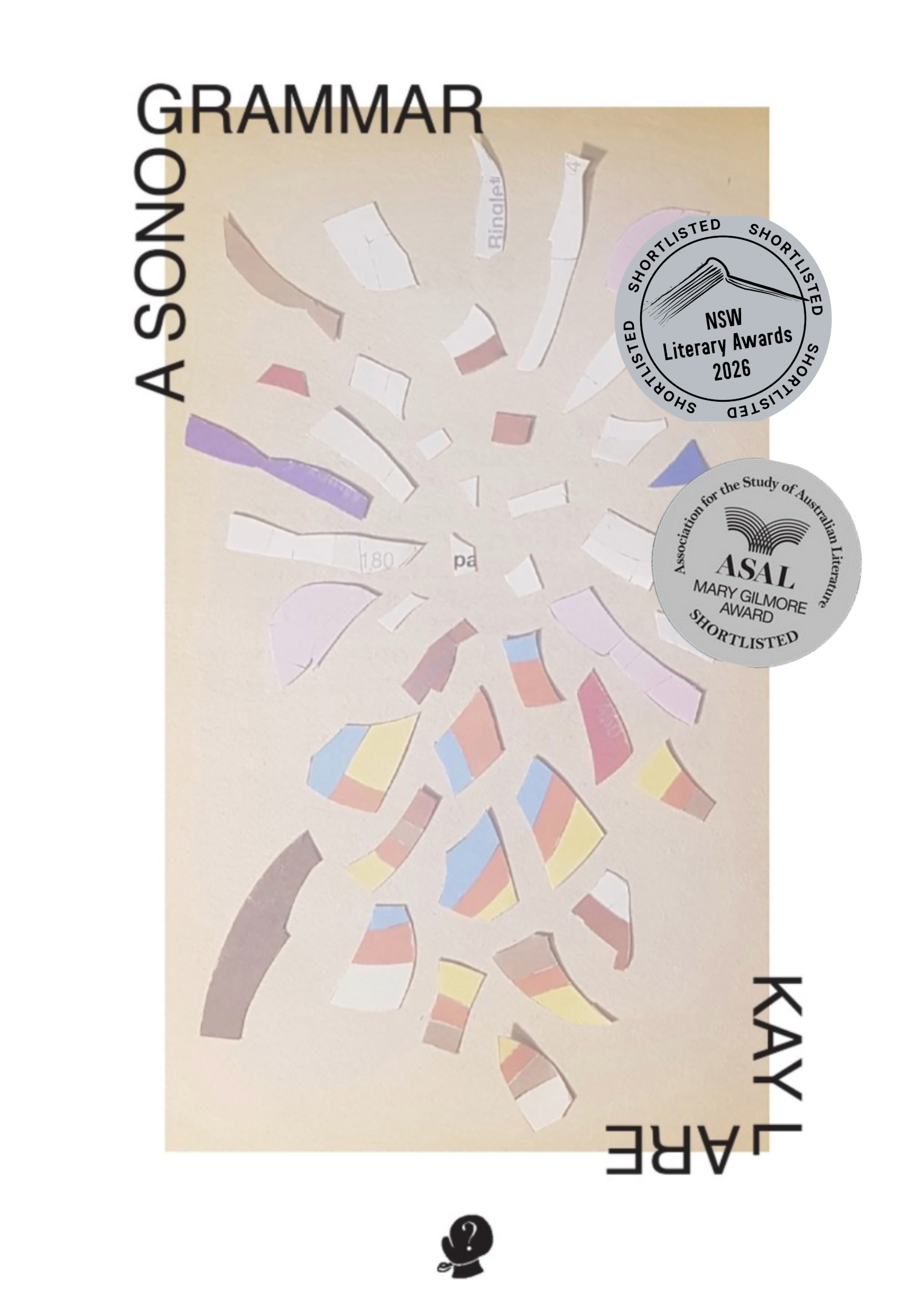
A Sonogrammar
2025, Puncher & Wattmann
Shortlisted, Kenneth Slessor Prize for Poetry, NSW Literary Awards
Shortlisted, Mary Gilmore Award, Association for the Study of Australian Literature
Highly Commended, First Book of Poetry Prize, Puncher & Wattmann
Judges comments, Kenneth Slessor Prize for Poetry
“A Sonogrammar is a feast of readerly arrangement and derangement. Taking Gertrude Stein’s seminal work Tender Buttons as its starting point, Are performs the operations of her mythic ‘sonogrammar’ to fully investigate the work and unveil fresh, obsessive layers of sonic and visual meaning and unmeaning through the application of ever-new lenses over the original text.
A Sonogrammar is conceptual writing of the highest order, revealing the embodied music of language. Though Stein is present throughout the work, so too is Are’s own distinct sensibility always in attendance in the soft tiles of colour, the subjective scansion of rhythm, and the tender play of assembly that reveals unending pleasure and discovery within the text that the titular sonogrammar scrutinises. The resulting work is a blowout of colour, syntax, music, invention and pure joy that offers a unique reading experience.”
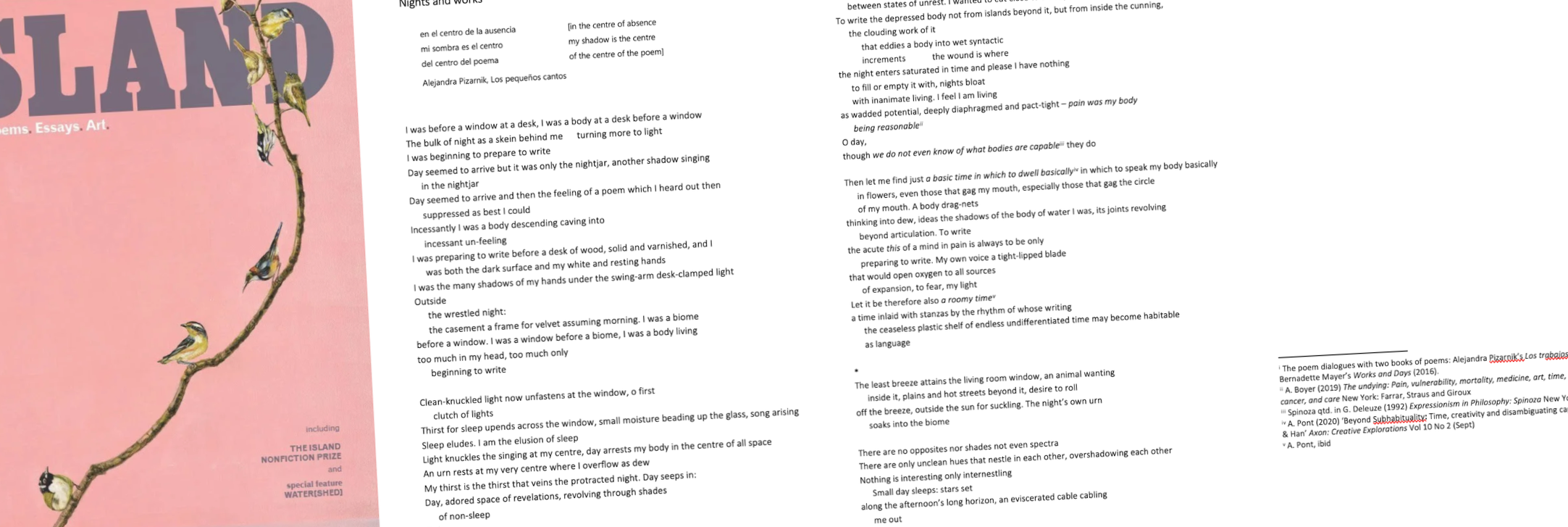
Nights and Works
2022
in Island No. 165
Shortlisted, Highly Commended Gwen Harwood Poetry Prize
Judges’ comments
“We admired the way this work instructs the reader to slow down—enacts that slowing down—and while the poem appears at first glance to be a poem about writing, it is actually a poem about being a body…We felt this poem was willing to take the biggest risks, and that it was undertaking serious, contemporary work, while being in dialogue with Pizarnik’s poetry and with the work of philosophers.”
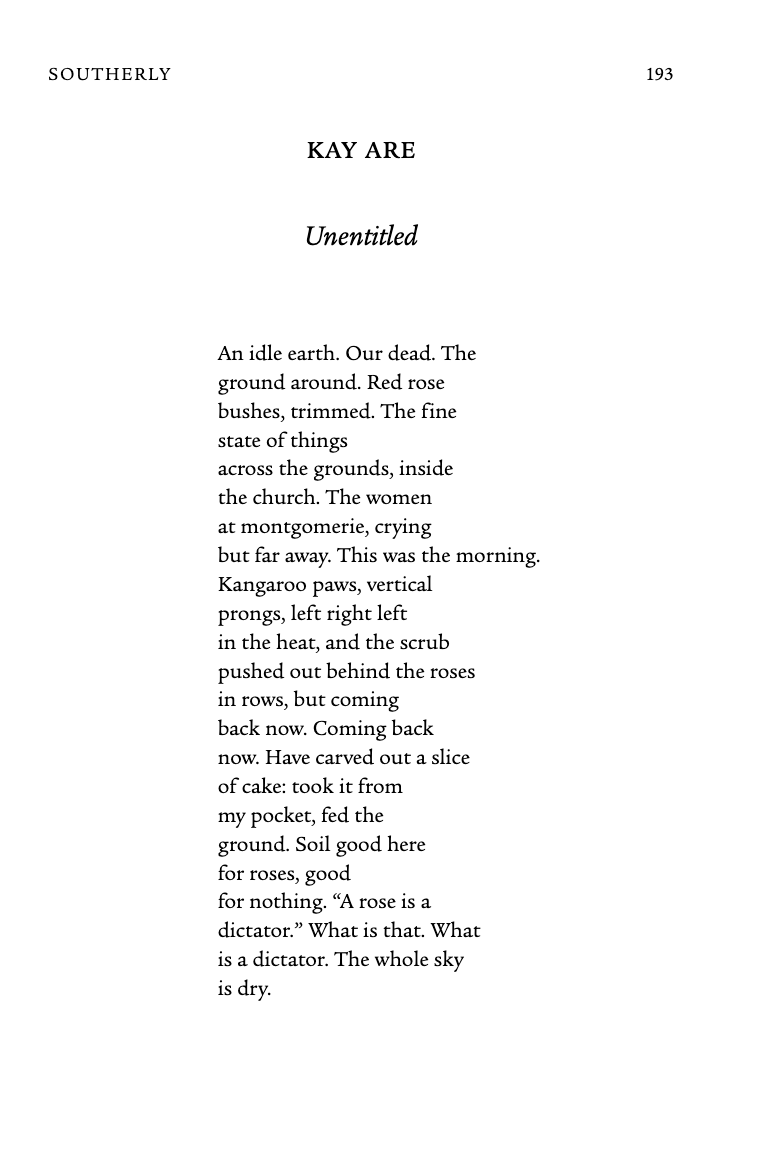
Unentitled
2016
in Southerly Vol. 76 Iss. 1
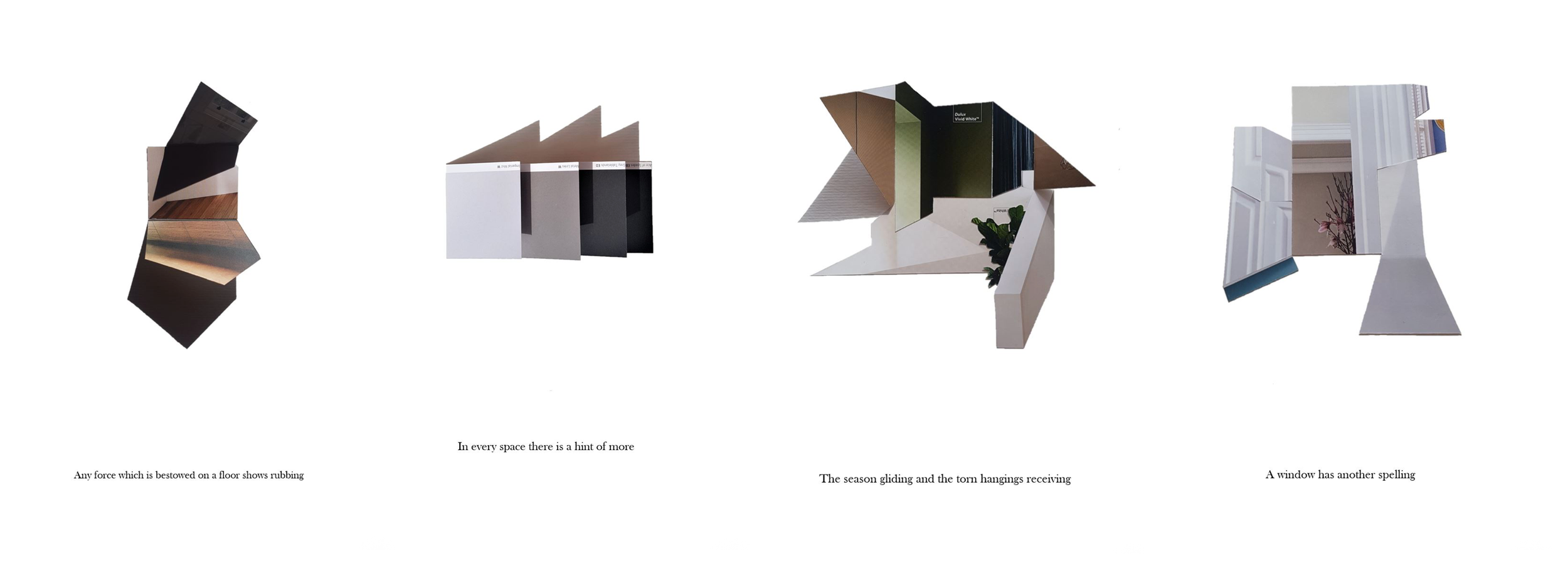
Production of Space
2020, in Ctrl+V No. 8
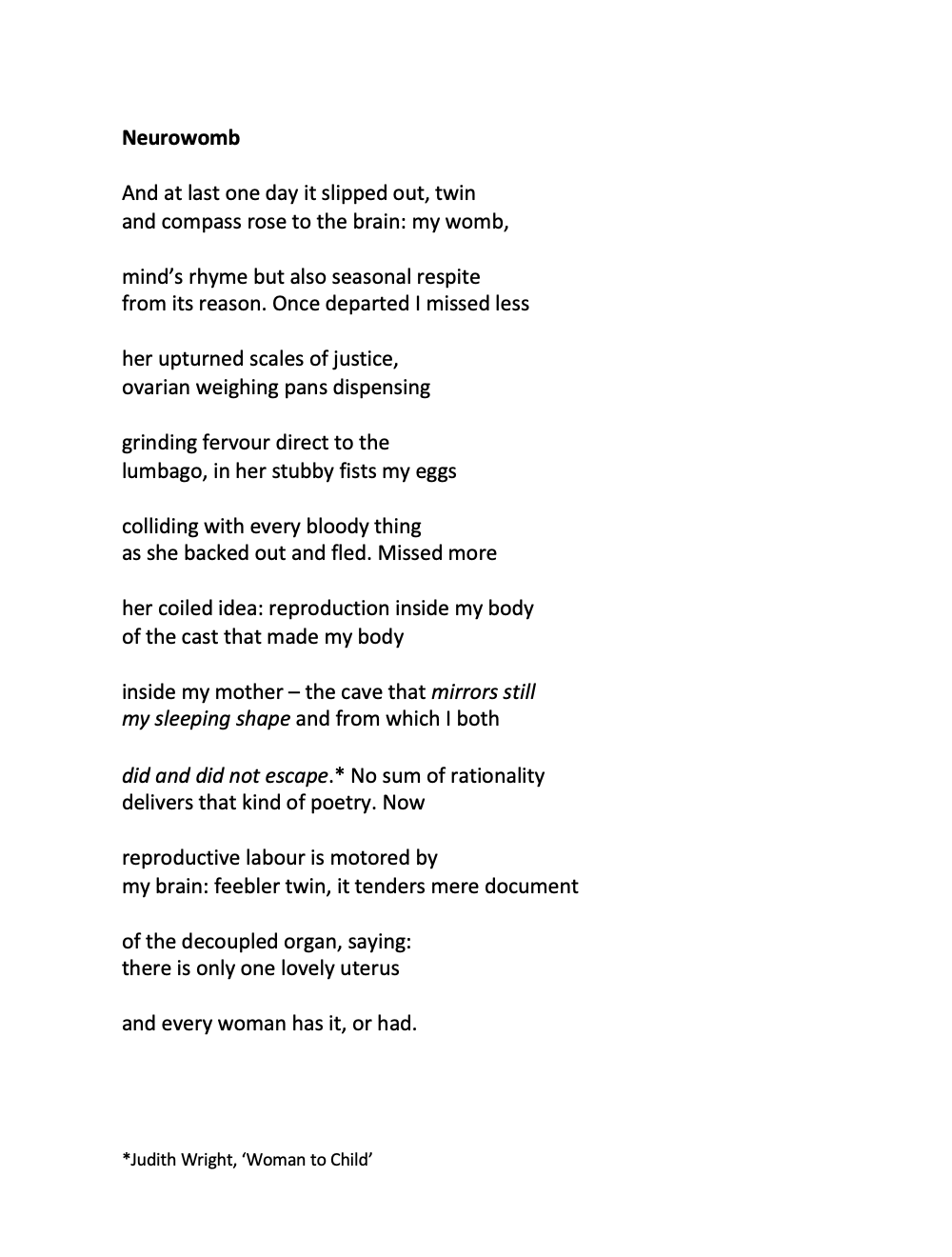
Neurowomb
2023
in The Writing Mind: Creative Writing Responses to Images of the Living Brain
J Prendergast, E Herbert-Goodall & J Webb (eds.)
Recent Work Press
This book project collects 60 creatively enhanced images of the living brain, each stimulus to two short-form ekphrastic creative responses, poetry or prose.
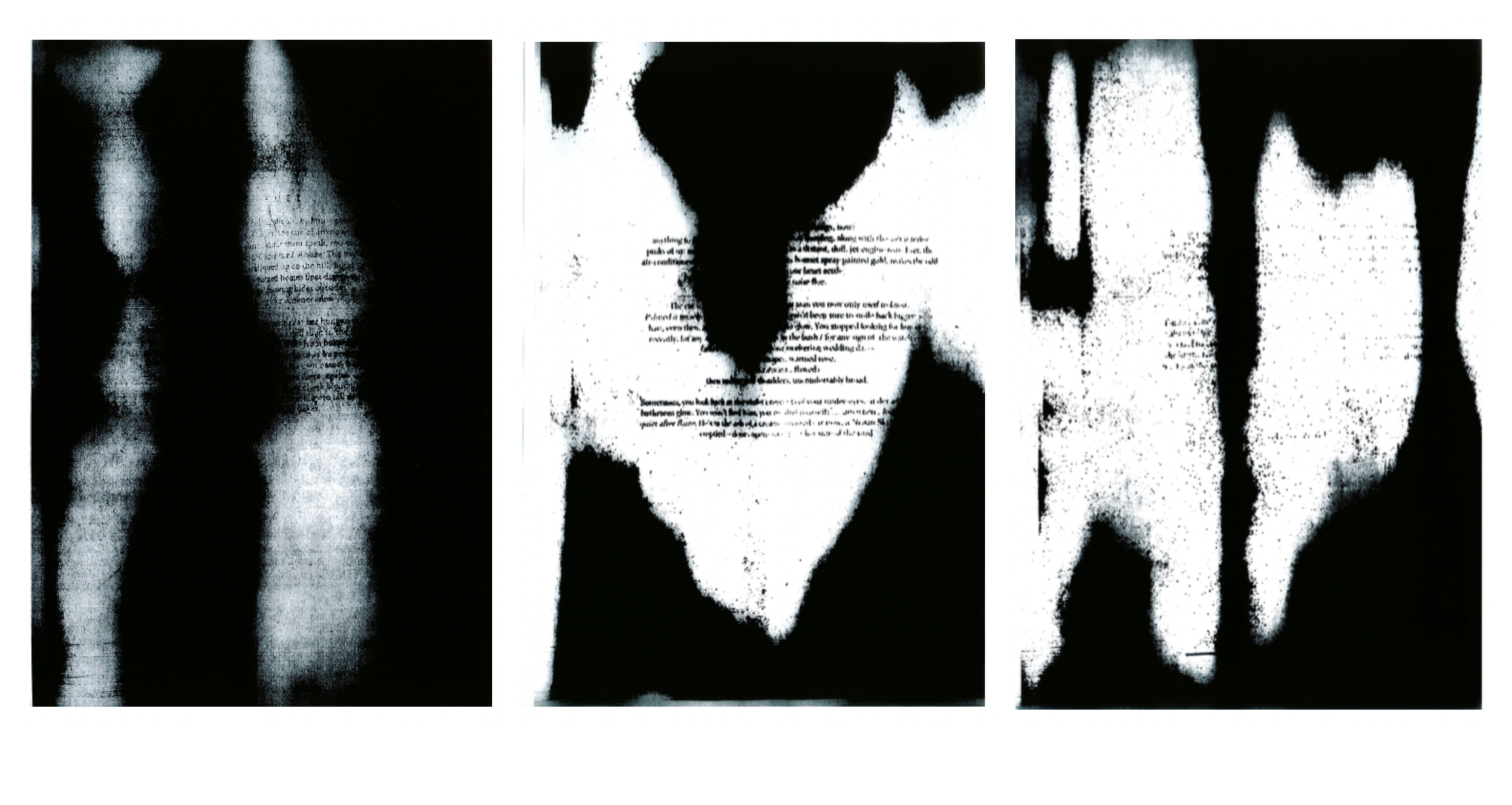
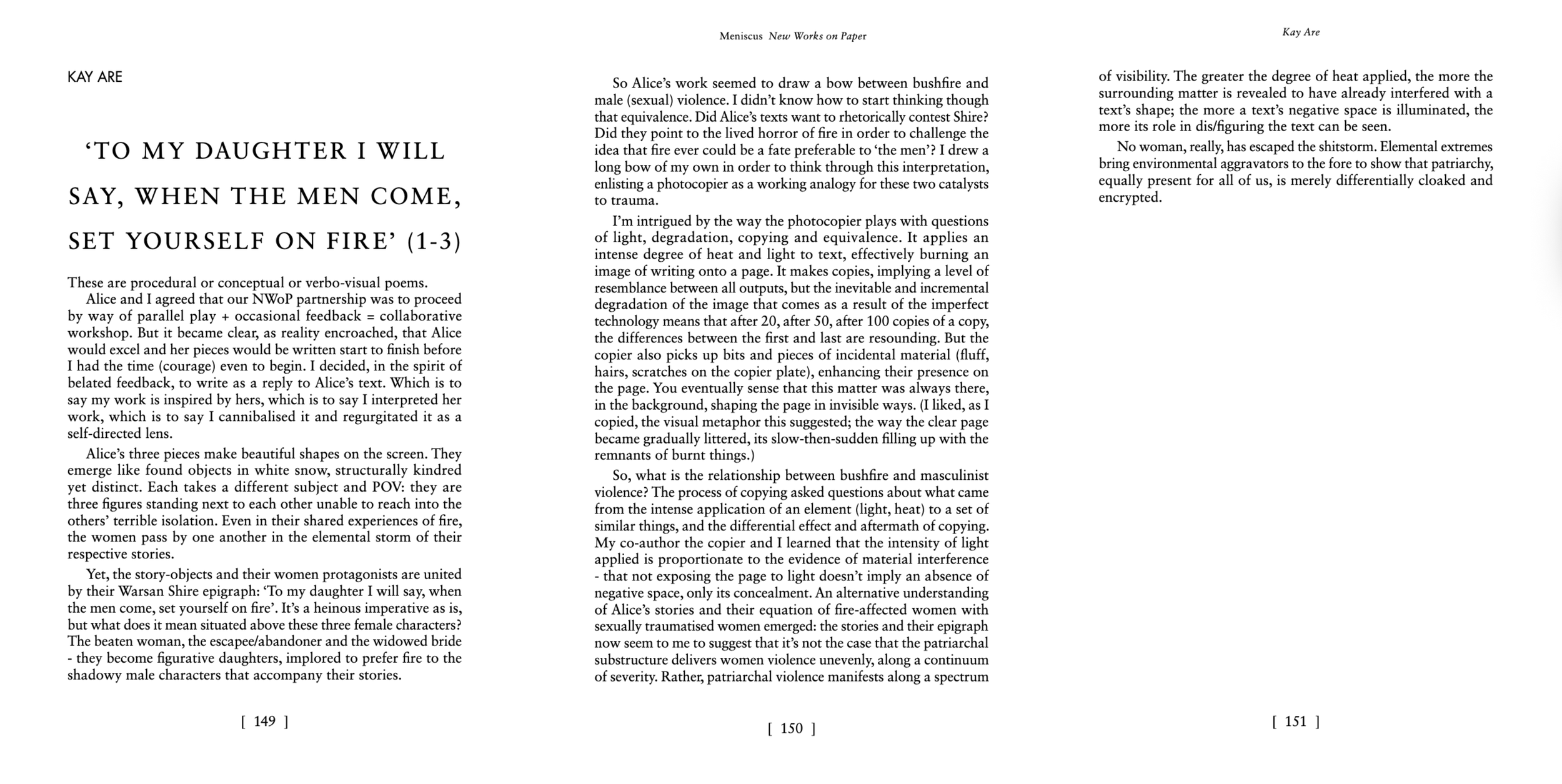
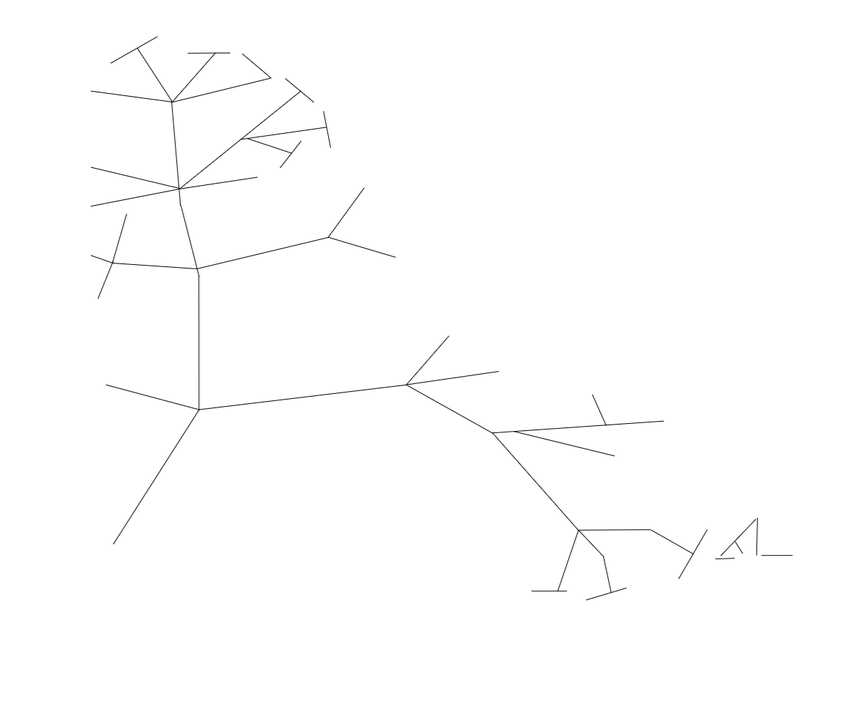
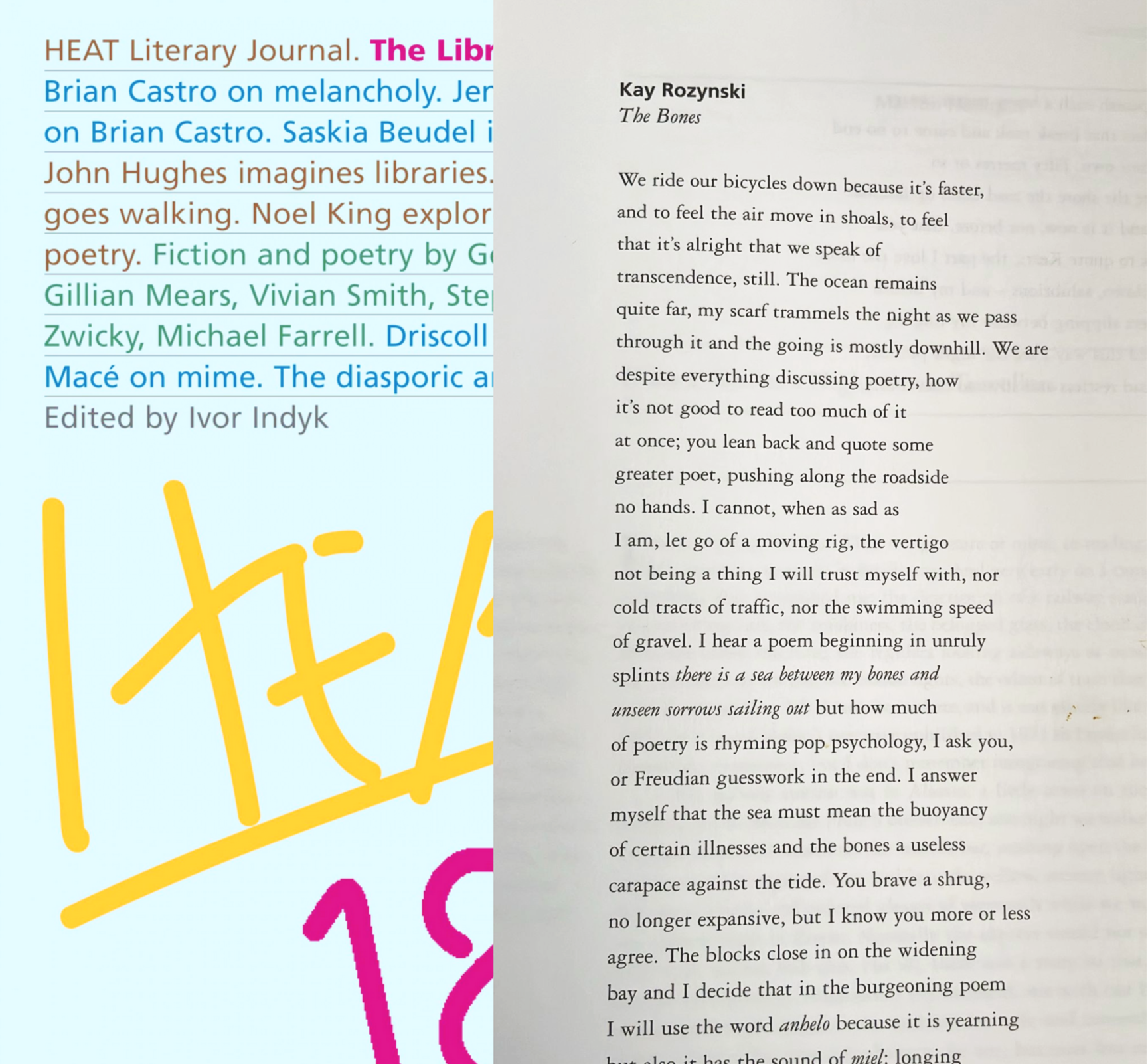
To my daughter I will say, when the men come, set yourself on fire
2017
in Meniscus Vol. 5 Iss. 2, Special Issue: New Works on Paper, ed. Antonia Pont
Copier poems responding to Alice Bishop’s piece ‘Burnoff: Three small stories of a Saturday, black (Something like summer snow)’. Alice and I were paired for the parallel-play writing project New Works on Paper and the public reading event of the same name. NWoP was convened by Antonia Pont: “[I envisaged an] atmosphere or attitude of ‘working alongside’, one which did not wish to dovetail with collaboration, but rather operate in a new space. […] I imagined it as staging an experiment in making a making process that could be at once ‘supportive’, collegial, autonomous (but not lonely), constructive, non competitive, and safe-though-unruly.”
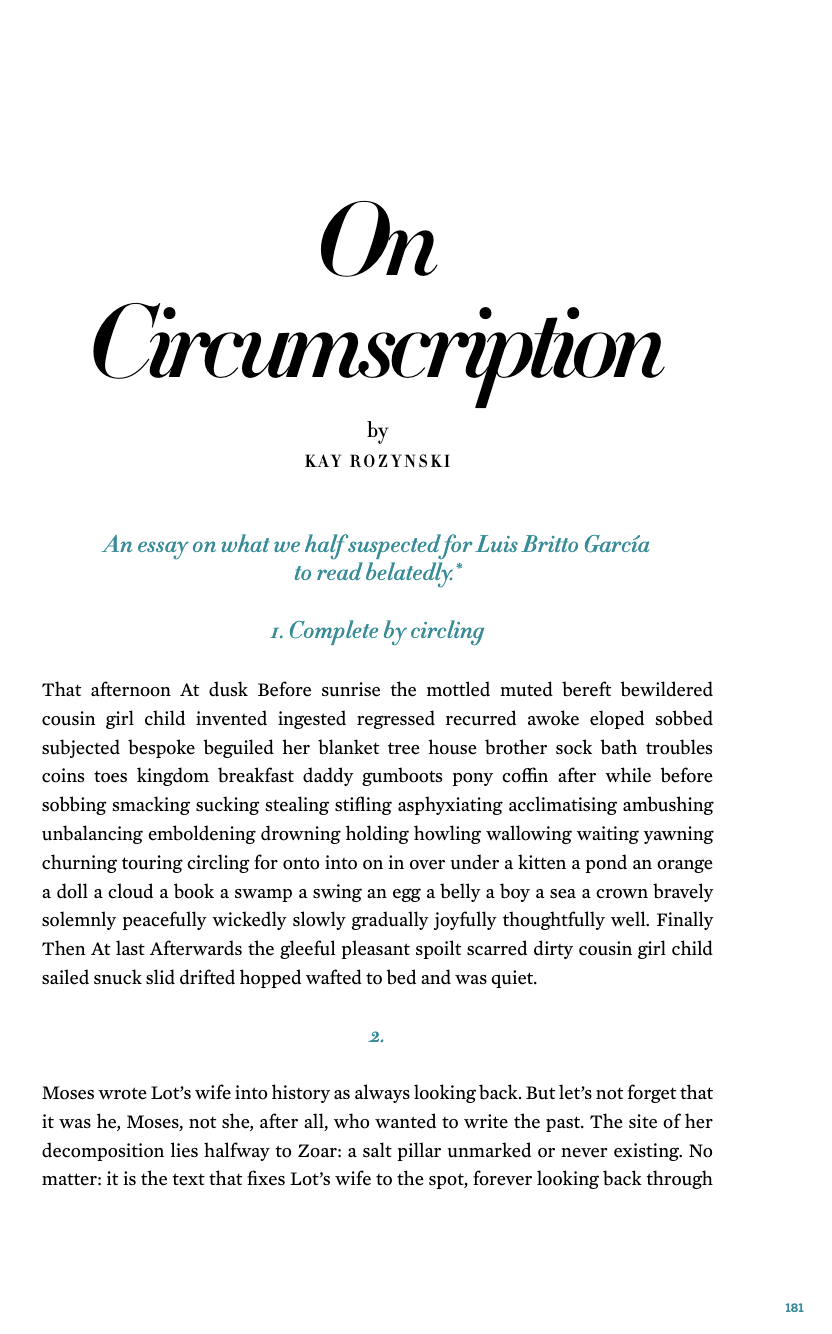
Natural Selection 2018
In Axon
Vol. 8 Iss. 1, Materiality, creativity, material poetics
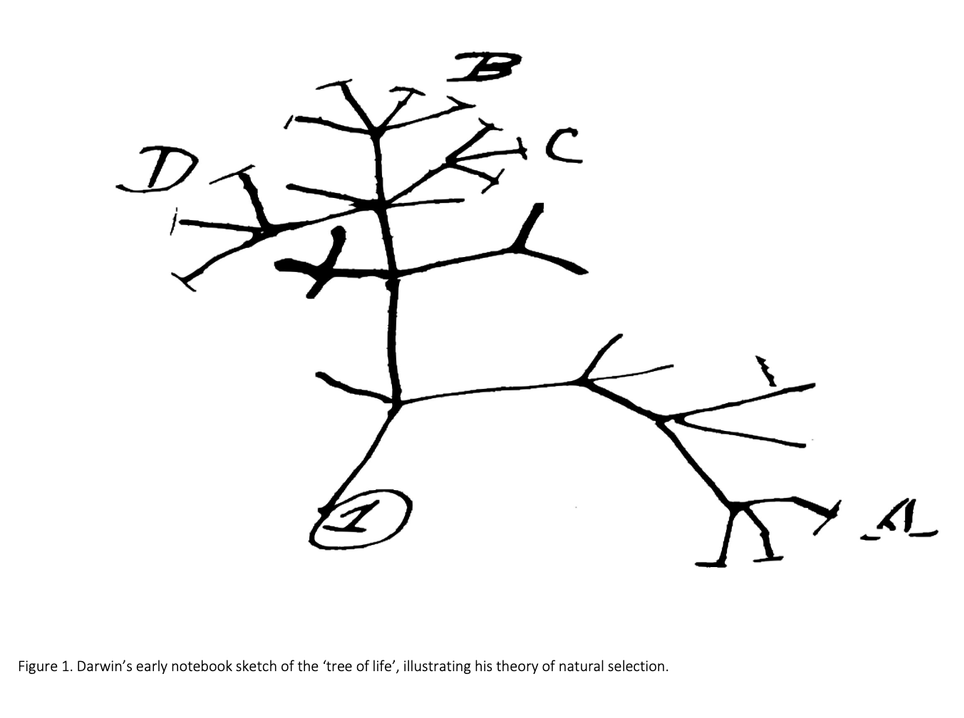
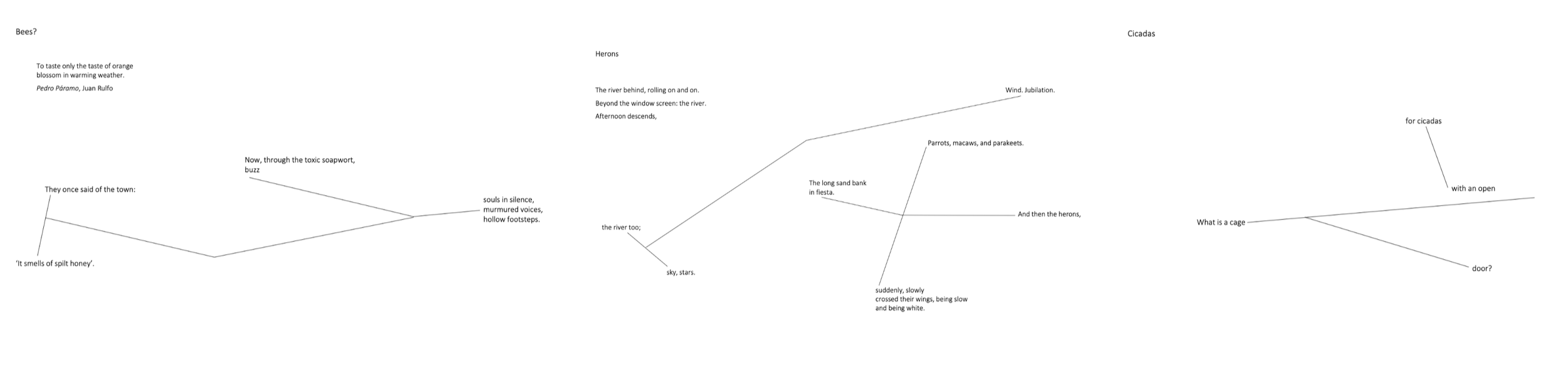
This work uses translation and diagramming as devices to offer an interpretation of Colombian poet Beatriz Restrepo’s 2014 collection Bestiario (Editorial Los Andes). The translation uses visual metaphor to convey my reading of her ‘Bestiary’ as concerned with the mutual nesting of human and non-human animal worlds.
As images, the translated poems point to the historical use of word and image, equally, as diagrammatic tools in the human organisation of species and inter-species relationships. They also correlate the evolution of species with the selective nature of translation: both proceed by engendering micro variations to an original version to cumulatively deliver a new outcome.
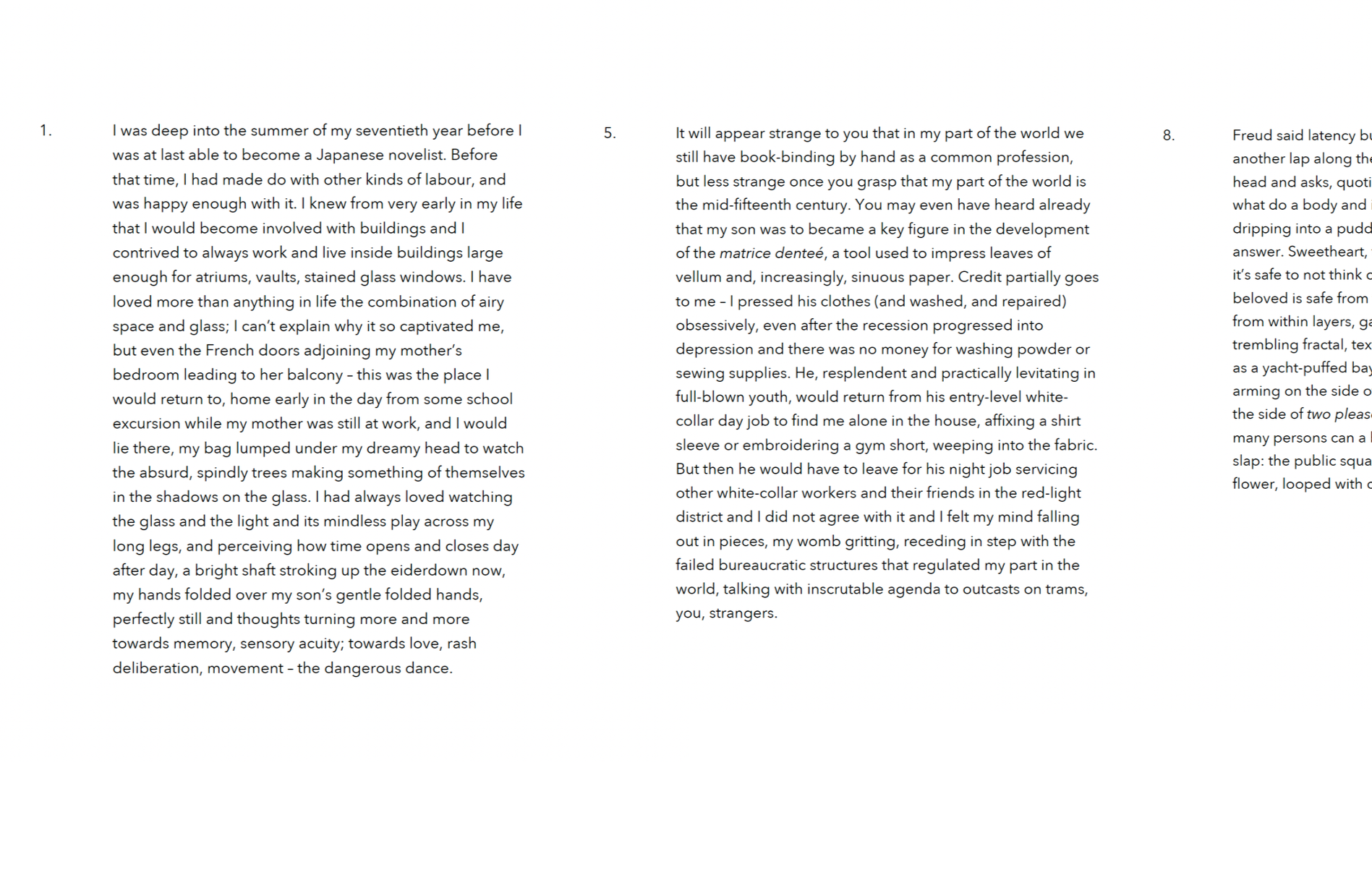
Breaking Out: Rash Translations
2018
in Double Dialogues Vol. 20
8 narrative poems - one half of a work (the other half: 8 visual collages) that practised breakage as a creative strategy.
For the poems, I made up a writing strategy to test unfaithfulness as generative conduct. The translators into English of Jacques Derrida’s Glas (1974; trans. 1986),* chose to leave some of its terms in French, enclosing them within square brackets, as though sutures for the rift that the act of translation creates. I made up a persona who, like me, spoke little French, and so could employ reckless association rather than fidelity in translating the residual French terms into a lens through which to interpret Glas.
*Glas is Derrida’s commentary on Jean Genet’s 1958 essay ‘What remains of a Rembrandt torn into four equal pieces and flushed down the toilet’.